


You taught your kindergarteners how to form every letter correctly… so you’re done teaching handwriting, right? Not quite!
One of the biggest mistakes I see with handwriting instruction is teaching letter formation during the first month or two of school and then moving on. Students may get an occasional handwriting worksheet, but we stop consistently reinforcing the correct way to form their letters.
Then May rolls around and we’re wondering why we’re still seeing backwards letters, letters floating all over the page, or students starting letters from the bottom.
Kindergarteners need handwriting practice every single day.
That doesn’t mean you need a separate 20-minute handwriting lesson every day. Once you’ve explicitly taught letter formation, the focus shifts to consistently reinforcing those skills during things you’re already doing.

Affiliate Disclosure: This post contains affiliate links, which means I may earn a small commission at no extra cost to you if you make a purchase through these links. As an Amazon Associate, I earn from qualifying purchases. I only recommend products that I personally use and love. Thank you for supporting my blog!
Think about handwriting like any other skill we teach in Kindergarten. We wouldn’t teach students how to blend words for a few weeks and then expect them to remember how to do it perfectly for the rest of the year. Handwriting is the same way.
Students need repetition to make correct letter formation automatic. And honestly, sometimes you have to be a little bit of a handwriting drill sergeant!
If you see a student start a letter from the bottom, have them erase it and try again. If a lowercase letter is floating above the line, point it out. If you know they can form a letter correctly, but they’re rushing through it, have them fix it. It’s much easier to reinforce correct habits every day than to try to undo months of incorrect letter formation later.
The key is short, consistent practice, and you can work it into routines you’re already doing.
Spend just a few minutes reviewing letter formation before another literacy activity. My Handwriting Teaching Slides work well for this because you can quickly model a letter, have students practice it, and move on.

You can find the full Handwriting Slides and matching worksheets here.
Writing time is handwriting practice, too! I start every writing lesson with a quick writing warm-up that gives students a few minutes of focused handwriting practice every single day. Then, we move into our drawing and sentence writing for the day.
This is one of my favorite ways to keep handwriting practice consistent without adding another lesson to our schedule. Students are practicing letter formation and then immediately applying those skills as they write words and sentences.

During our Daily Writing Journal, I’m also paying attention to how students are forming their letters, not just what they’re writing. If I see a letter formed incorrectly, I have them fix it! Those little corrections and reminders throughout the year help reinforce the letter formation we’ve already learned.
You can find the Kindergarten Daily Writing Journal here.
Keep dry erase boards handy for quick practice during phonics lessons, small groups, or transitions.
If students are writing a letter, word, or sentence during another lesson, that’s another opportunity to reinforce correct letter formation.

I like using these mini whiteboards because they have the primary handwriting lines on them.
Handwriting practice doesn’t always have to involve a pencil.
Have students roll and form letters with play dough during centers. They’re practicing letter formation while also strengthening the fine motor skills needed for writing.

Markers, crayons, colored pencils, chalk, and dry erase markers can make handwriting practice feel new without requiring a brand-new activity.
Use different writing tools during centers or independent practice while keeping the focus on correct letter formation.
Sometimes you just need something simple!
Keep handwriting practice pages available for morning work, centers, small groups, early finishers, or extra practice at home.
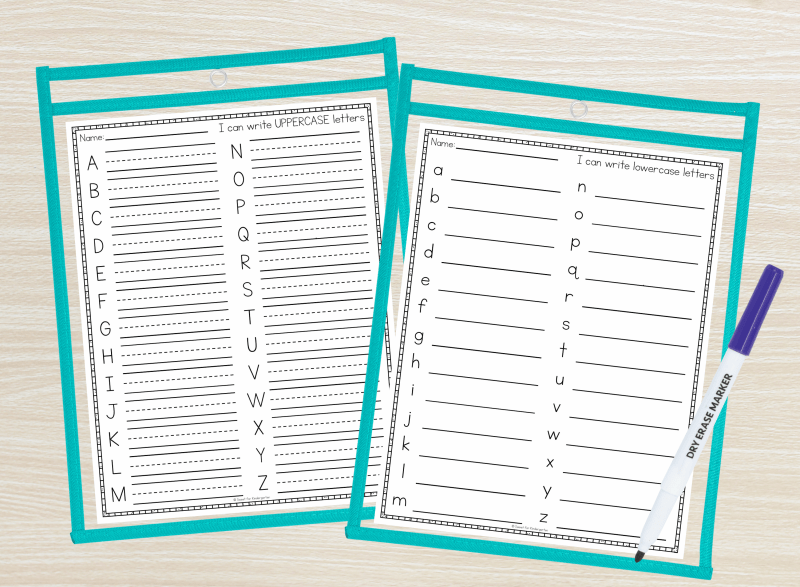
I created these FREE Uppercase and Lowercase Handwriting Practice Pages specifically for easy, ongoing practice throughout the year. I stick this in a dry erase pocket (or you can laminate it) and use it as early finisher work. I also will send it home as homework or additional practice from time to time.
You don’t need to completely overhaul your schedule to make handwriting a priority.
Teach students how to form their letters explicitly, and then keep holding them accountable for that formation all year long.
A few minutes with your handwriting slides, correcting letter formation during writing, practicing on a dry erase board, or pulling out a quick handwriting page can give students the repetition they need.
Don’t teach handwriting in August and hope it sticks until May.
Practice it. Notice it. Correct it. And keep coming back to it all year long.

